Конференция «ЖвК» 2025
10-11 October 2025, Orion Hotel, Bishkek
Program
The LiK conference program in English (pdf)
Программа конференции на русском языке (в pdf формате)
LiK conference 2025 brochure in English
DAY 1, October 10, 2025
Plenary Session 1.1: Life in Kyrgyzstan Study 2025 – Data and Research Agenda
Damir Esenaliev, IGZ/ISDC: Wave 7 of the Life in Kyrgyzstan Study – data collection results (presentation)
Francisca Castro, ISDC: Polarization in Kyrgyzstan
Stefan Buchmayer, GIZ: Findings and work plans for GIZ-PREVECA project in Central Asia
Philipp Schroeder, Nazarbayev University: Understanding Youth Perspectives through Event-Based and Applied Qualitative Research: Insights from the GIZ-PREVECA Project in Kyrgyzstan (presentation)
Plenary Session 1.2: Recent Economic Developments in Kyrgyzstan
Choro Seyitov, First Deputy Ministry of Economy and Commerce of KR: Country’s Development Strategy till 2030
Azat Kozubekov, Deputy Chairman, NBKR: Monetary and financial developments in Kyrgyzstan
Kanat Tilekeyev, Associate Director, UCA: Economic and social developments from academic perspective
Session 1.3 by the World Bank: Perspectives on Middle Class, Fiscal Policy, and Public Voices in Kyrgyzstan
Elizaveta Perova, World Bank: Middle Class study in the Kyrgyz Republic
Gohar Gyulumyan, World Bank: Findings of the Public Finance Review for the Kyrgyz Republic
Aibek Ashirov, World Bank: Findings from Listening to the Kyrgyz Republic Survey
Session 1.4: Agrarian Transformations and Rural Change in Central Asia
Kanat Tilekeyev, UCA: Rural Youth: Developments in Central Asia
Irène Mestre, IFEAC: Contested transitions: exploring the narratives of agri-food systems in Central Asia
Asel Murzakulova, UCA: Agrarian dynamics and migration: comparative analysis of agroecological zones in Kyrgyzstan
Session 1.5: Gender Inequality in Civic Engagement, Rural Work, and Land Access
Marzhan Aikimbaeva, UCA: Exploring Gender Disparities in Civic Life: Evidence from Kyrgyzstan
Zalina Enikeeva, UCA: Women in Kyrgyzstan 1990 – 2024: Family, Work, and Social Norms
Nagima Shukurbekova, UCA: Rural Youth Perspectives on Land Ownership and Decision-Making Power: A Gendered Analysis from Central Asia (presentation)
Session 1.6: Behavioral Preferences Under Institutional and Environmental Constraints in Central Asia
Nodir Djanibekov, IAMO: From theory to field: Measuring farmers’ risk and time preferences (presentation)
Marlen Tynaliev, IAMO: Under irrigation water scarcity: Exploring the behavioral responses of smallholders in Kyrgyzstan (presentation)
Abdusame Tadjiev, IAMO: Institutions and preferences: How cotton sector governance shapes farmers’ risk and time preferences in Uzbekistan (presentation)
Session 1.7 Urban Resilience in Kyrgyzstan: Legal, Digital, and Design Responses from Naryn
Madina Junussova, UCA: Design-driven resilience and participatory urbanism (presentation)
Sarygul Alchynbaev, TOLESFOR: Legal and policy frameworks for climate-informed urban planning
Chynarkan Saparova, UCA: Geospatial data and GIS for decision-making in local governments (presentation)
Session 1.8: Mobilization, Memory, and Media: Perspectives on Central Asian Transformations
Niginakhon Uralova, Johannes Gutenberg University Mainz & Svetlana Dzardanova, Freedom for Eurasia: Framing Femicide: Analyzing News Reporting in Uzbekistan (2014–2024) (presentation)
Niginakhon Uralova, Johannes Gutenberg University Mainz: Negotiating the Soviet Past: How Young People Navigate State and Family Narratives in Uzbekistan and Kyrgyzstan (presentation)
Mukaram Toktogulova, Esimde Research Platform: Voice of the People – Time of Change: Social-Democratic Movements in Kyrgyzstan in 1985-1991
Session 1.9 by WFP: Food Security and Nutrition
Giulio Porelli and Evgenii Shibkov, WFP: Impact of structural stressors and climate shocks on household food security
Aizhan Erisheva, WFP: Social and behaviour change communication and adoption of climate-resilient behaviour by rural communities
Kanykei Mukambetova, WFP: The role of schools as platforms for promoting healthy dietary habits among children and their families
Session 1.10: Socio-Economic and Policy Pathways for Sustainable Development in Kyrgyzstan: Gender Equality, Public Health, and Agricultural Transformation
Medet Tulegenov, Ala-Too International University: Gender perspectives on norms of a good citizen: evidence from surveys in Kyrgyzstan
Bekchoro Aliiaskarov, Ala-Too International University: Modern challenges in prevention of ыubstance use among youth in Kyrgyzstan: perspectives of criminology
Maral Sagynalieva, Ala-Too International University: Opportunities and Barriers for Kyrgyz Farmers in the Transition to Sustainable Agriculture
Session 1.11: Women’s Agency, Identity, and Well-Being in Central Asia
Altyn Kapalova, UCA: Women’s Mental Health Recovery Practices in Traditional Kyrgyz Culture
Damir Esenaliev, IGZ/ISDC: Almash and Beyond: Lived Experiences of Daughters Named in Hope of Sons (presentation)
Mohru Mardonova, IFPRI: Double burden or newfound freedom? Women’s empowerment amid large-scale male labor migration from rural Tajikistan
Plenary session 1.12: Keynote Speech by Dr Asel Doolotkeldieva, University of Potsdam: Towards ‘vernacular’ Central Asian geopolitics: Russia-Kyrgyzstan/Kazakhstan entanglements after 2022
DAY 2, October 11, 2025
Session 2.1: Rural Economies in Transition: Livestock, Crop Protection, and Climate Adaptation in Central Asia and Mongolia
Martin Petrick, Justus Liebig University Giessen: Livestock value chains in Central Asia: From smallholders to corporate business? (presentation)
Jakhongir Babadjanov, FAO Uzbekistan: Understanding farmers’ decisions to adopt biological crop protection approaches in Uzbekistan (presentation)
Kadyrbek Sultakeev, AUCA / Justus Liebig University Giessen: The role of livestock as wealth, identity and honor: economic and anthropological analysis of livestock in Kyrgyz society (presentation)
Tisorn Songsermsawas, IFAD: Adoption of climate adaptation practices and livelihoods of pasture herders: Evidence from Mongolia
Session 2.2: New Approaches to Industry Assessment: Theory, Practice, and Lessons Learned
Kairatbek Dzhamangulov, National Academy of Sciences of the Kyrgyz Republic: Youth Economic Development Index – How Will the New Index Contribute to Improving the Lives of Young People?
Zhakshylyk Aitbayev, Evidence Central Asia: Who Is Driving Kyrgyzstan’s Creative Industries? – Sector Champions
Elnura Kazakbaeva, Evidence Central Asia: Evaluation of the Social Assistance Program for Low-Income Families in the Kyrgyz Republic – Results of a Comprehensive Study
Kunduz Kydyrova, Evidence Central Asia: Developing a Monitoring and Evaluation System for the Green Economy Program – Insights and Lessons Learned
Session 2.3: Socio-Economic and Climate Risks in Kyrgyz Agricultural Systems
Md Sofiullah, Rhine-Waal University of Applied Sciences: Socio-economic assessment of existing forest and agroforestry production systems for fruit and nut production in Kyrgyzstan – A field study using Monte-Carlo simulation analysis
Sabina Talantbek kyzy, AUCA: Impact of Multiple Shocks on Agricultural Income in Kyrgyzstan (presentation)
Salima Bekbolotova, IAMO: Predicting Food Security in Kyrgyzstan: A Machine Learning Approach
Aizhamal Duishonbekova, OSCE Academy: The Impact of Climate Change on Agricultural Output in Kyrgyzstan (presentation)
Session 2.5: Improving Air Quality Through Nature-Based Solutions: Insights from Science, Practice, and Policy in Bishkek
Jeremie Berlioux, Nature Foundation: Urban Biodiversity and Bioindicators for a Healthy Urban Environment in Bishkek (presentation)
Anna Kirilenko, Environmental expert: Nature-Based Solutions for Urban Wellbeing and Environmental Resilience in Bishkek (presentation)
Azat Muradyl, MoveGreen: Local Evidence on the Benefits of Vertical Greening in Bishkek (presentation)
Session 2.6: Russia’s War in Ukraine and Its Regional Impact: Perspectives from Central Asia and Beyond
Aleksey Oschepkov, Free University Berlin: The impact of immigration on the native population: Learning from the influx of Ukrainian refugees to Russia in 2014
Ulukbek Beishekeev, University of Hamburg: Russian Attitudes to the War in Ukraine — a Case Study of Kyrgyzstan (presentation)
Bakhytzhan Kurmanov, UCA: Finding Space for Activism: Understanding Youth Activists in Kazakhstan and Kyrgyzstan in the Wake of Russia’s War against Ukraine
Session 2.7 Glaciers, Rivers, and Traditional Knowledge: Environmental Transformations in Mountain Societies
Fasih Uddin, UCA: Glacial Recession processes and Glacial Lake inventories in High Mountain Asian Communities (presentation)
Asif Khan, SAS UCA: Nature’s Living Legacy: Ethnobotanical Wisdom and Indigenous Plant Use in Gulmit, Hunza (presentation)
Aslam Qadamov, UCA: Climate-Induced Shifts in Seasonal Runoff of the Gunt River: Implications for Agriculture and Hydropower in the Pamirs (presentation)
Session 2.8: Adapting to Climate Change: Social, Economic, and Cultural Dimensions
Zhandos Tursumbekov, CERGE-EI: Weather Shocks and Informal Social Networks: Evidence from Kyrgyzstan
Soltobek Sarymsakov, Justus Liebig University Giessen: The social and cultural barriers to the use of renewable energy sources in Kyrgyzstan
James T. Bang, Bard College: Trust, Risk, and Attitudes toward Climate Change: Evidence from Kyrgyzstan
Jules Hugot, ADB: Income Diversification to Manage Climate Risk in Kyrgyzstan (presentation)
Session 2.9 Women’s Agency, Education, and Participation in Contemporary Kyrgyzstan
Chisato Tachibana, University of Tokyo: Does Domestic Violence Law Shift Gender Attitudes and Female Labor Force Participation in Kyrgyzstan? (presentation)
Damir Esenaliev, IGZ/ISDC: Female Empowerment and Non-Electoral Political Participation: Experimental Evidence from Kyrgyzstan
Anusha Ashurova, OSCE Academy: Exploring Gender Disparities in Migration Intentions among Kyrgyz Youth: Evidence from the Life in Kyrgyzstan Data 2019 (presentation)
Aizura Batyraliyeva, M-Vector: Education Without Borders: The Portrait of a Kyrgyz Woman in Online Learning (presentation)
Session 2.10: Poverty, Risk, and the Shadow Economy: Insights from Kyrgyzstan
Altyn Kapalova, UCA: Cultural Aspects of Poverty Perception in Kyrgyz Rural Areas
Bermet Talasbek kyzy, AUCA: Impact of risk aversion on net worth of households: Survey study in Kyrgyzstan
Aibek Dushebaev, Independent Expert in Macroeconomics: Dynamics of the Shadow Economy in Kyrgyzstan: An Empirical Analysis Based on the MIMIC Model
About the Life in Kyrgyzstan conference 2025
This year marked the 11th anniversary of the series of Life in Kyrgyzstan Conferences held in Bishkek. The conference was convened by the University of Central Asia’s (UCA) Institute of Public Policy and Administration, the Leibniz Institute of Vegetable and Ornamental Crops (IGZ), and ISDC – International Security and Development Center, with additional support from the American University of Central Asia (AUCA), the Asian Development Bank (ADB), the United Nations Population Fund (UNFPA), and the World Bank.
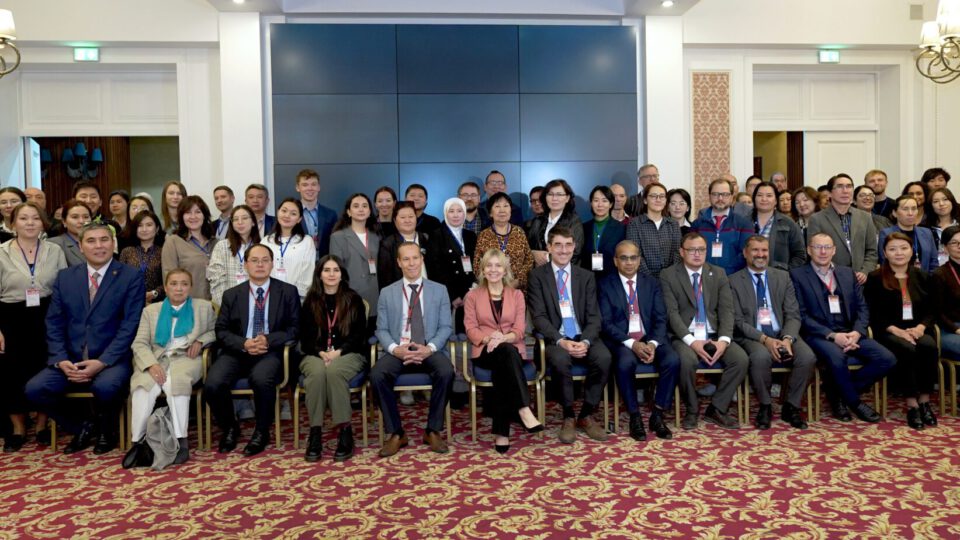
The LiK conference 2025 was held in the Orion Hotel in Bishkek on 10-11 October 2025. In addition to keynote speech and two days of over 25 thematic panel sessions, the conference included an academic seminar, a LiK data users workshop, professional and academic networking opportunities, an update on the 2025 round of LiK Study data collection, and a conference reception. This year’s keynote speaker was Dr. Asel Doolotkeldieva, University of Potsdam.
The academic committee comprised of Prof. Kathryn Anderson (Vanderbilt University), Prof. Tilman Brück (IGZ/HU/ISDC), Dr. Damir Esenaliev (IGZ/ISDC), Prof. Christopher Gerry (UCA), Aibek Ashirov (World Bank), Dr. Baktybek Kainazarov (UNFPA), Gulnur Kerimkulova (ADB), Dr. Kanat Tilekeyev (UCA), and Dr. Nurgul Tilenbaeva (AUCA).
The Life in Kyrgyzstan Conference brought together national and international experts from academia, government, development agencies, non-governmental organizations, media and research institutions. The annual LiK Conference serves as a platform for exchanging leading-edge knowledge and experiences on recent socio-economic and environmental developments in Kyrgyzstan and Central Asia, with the aim of promoting evidence-based policy making.
Организаторы
Институт государственного управления и политики Университета Центральной Азии (ИГУП УЦА) был основан в 2011 году для укрепления государственной политики в Центральной Азии. Деятельность института сосредоточена на глубоком анализе региональных вызовов и развитии экспертного потенциала госсектора и гражданского общества. Дополнительная информация: http://ucentralasia.org/ippa
Институт овощных и декоративных культур им. Лейбница (IGZ) специализируется на фундаментальных и прикладных проектах для устойчивого растениеводства и защиты природных ресурсов. Научные достижения института подтверждены публикациями в ведущих мировых журналах и успешным привлечением грантов. Дополнительная информация: http://www.igzev.de/.
Международный центр безопасности и развития (ISDC) это некоммерческий академический институт, базирующийся в Берлине, Германия. Центр проводит исследования, направленные на улучшение жизни людей в условиях вооруженных конфликтов и гуманитарных катастроф. ISDC предоставляет политические рекомендации и содействует укреплению потенциала в вопросах международной безопасности и социально-экономического развития. Дополнительная информация: https://isdc.org/.
Partner Institutions
Американский университет в Центральной Азии (АУЦА) — многопрофильное учебное сообщество, следующее американским традициям свободных искусств (liberal arts). Миссия университета заключается в подготовке просвещенных и целеустремленных лидеров для трансформации Центральной Азии. Дополнительная информация: https://www.auca.kg/
The Asian Development Bank (ADB) envisions a prosperous, inclusive, resilient, and sustainable Asia and the Pacific, while sustaining its efforts to eradicate extreme poverty in the region. ADB assists its members, and partners, by providing loans, technical assistance, grants, and equity investments to promote social and economic development. ADB maximizes the development impact of its assistance by facilitating policy dialogues, providing advisory services, and mobilizing financial resources through co-financing operations. For more information visit https://www.adb.org/.
ЮНФПА (UNFPA) — агентство ООН в области сексуального и репродуктивного здоровья. С 1992 года ЮНФПА активно работает в Кыргызской Республике, поддерживая переписи населения, вопросы репродуктивного здоровья и развитие медицинских услуг для молодежи. Дополнительная информация: https://kyrgyzstan.unfpa.org/en
Всемирный Банк международная организация, предоставляющая финансирование, консультации и исследования развивающимся странам. С 1992 года финансовая помощь Банка Кыргызстану составила более 2 024 млн долларов США. Дополнительная информация: https://www.worldbank.org.